Mooc Ornitho
age
Ovarian Stimulation Challenges, Bologna Criteria Evaluation, and Poor Ovarian Response Treatment Protocols
For women undergoing assisted reproduction who experience lower-than-expected follicle development during controlled ovarian hyperstimulation, navigating subsequent cycles requires specialized clinical expertise. Recognized in clinical reproductive medicine as poor ovarian response, this condition typically manifests as a reduced yield of retrieved oocytes despite high-dose gonadotropin stimulation, often correlating with advanced age or diminished follicular reserves. Standard high-dose protocols frequently fail to improve outcomes in these cases, necessitating a transition toward personalized, evidence-based alternative strategies. Opting for a specialized poor ovarian response treatment protocol in Madrid allows international patients to access customized mild stimulation, double ovarian stimulation cycles, adjuvant mitochondrial priming, and advanced embryological techniques designed to maximize the potential of every retrieved oocyte.

Clinical Definition and Diagnostic Criteria for Poor Responders
Accurate identification and classification of poor ovarian response are essential for designing realistic treatment plans and optimizing success rates.
Key clinical criteria used by reproductive endocrinologists to evaluate poor responders include:
- Bologna criteria guidelines, which require at least two of three features: advanced maternal age, prior history of poor ovarian response, or abnormal ovarian reserve markers.
- Previous cycle outcomes showing three or fewer oocytes retrieved following standard conventional stimulation protocols.
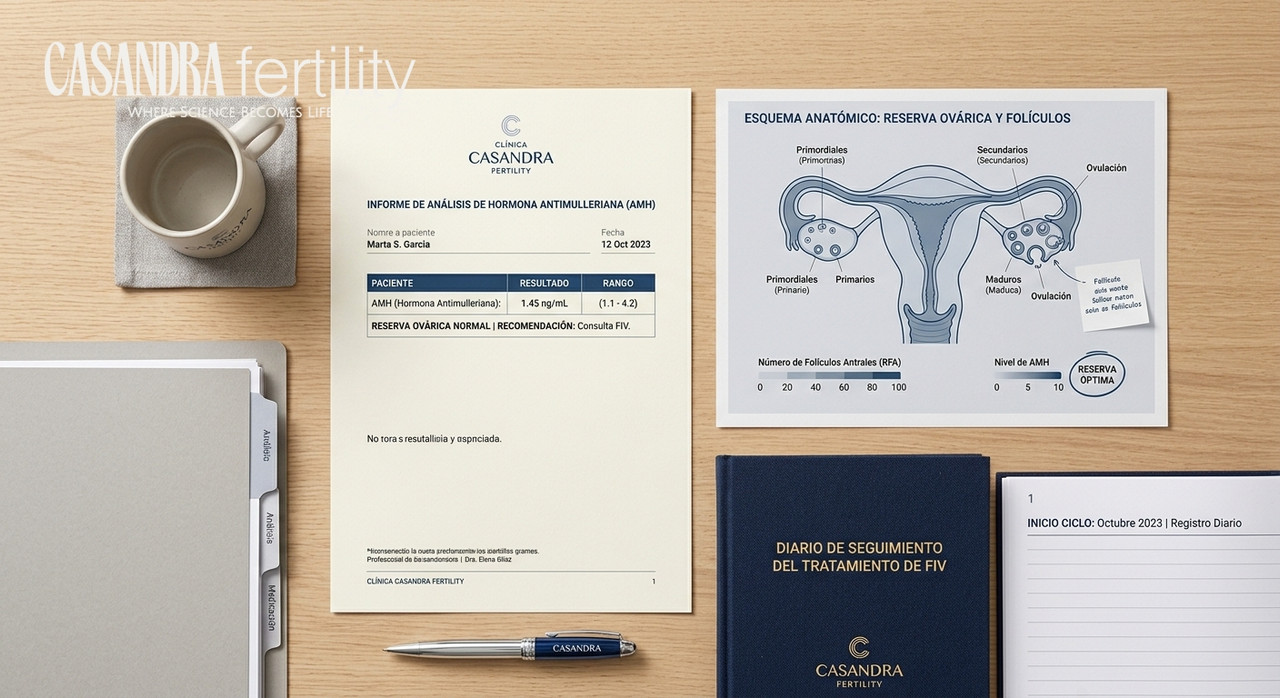
- Depleted anti-Müllerian hormone levels combined with low baseline antral follicle counts during early follicular assessments.
- Evaluation of potential contributing factors, including previous pelvic surgery, genetic conditions, or exposure to gonadotoxic therapies.
- Assessment of individual follicular response velocity to determine whether protocol modifications can improve future oocyte yield.
Establishing these diagnostic benchmarks allows clinical teams to tailor future stimulation schedules specifically to the patient's physiological profile.
Advanced Clinical Protocols for Low-Yield Patients
Managing patients who exhibit poor ovarian response requires moving away from conventional high-dose gonadotropin regimens toward innovative, physiological approaches.
Specialized clinical strategies include:
Mild ovarian stimulation and natural cycle IVF, utilizing lower doses of gonadotropins combined with oral agents to focus on oocyte quality rather than quantity.
Double stimulation protocols (DuoStim), which involve two independent follicular recruitment and retrieval phases within a single menstrual cycle to accelerate embryo accumulation.
Adjuvant treatments such as growth hormone supplementation, androgen priming (DHEA or testosterone), and coenzyme Q10 to improve cellular energy and oocyte cytoplasmic competence.
Luteal phase stimulation protocols designed to capture secondary follicular waves that develop outside the standard follicular window.
Embryology Laboratory Precision and Gamete Handling
When egg retrieval yields a limited number of oocytes, the technical skill of the embryology laboratory becomes a critical factor in achieving pregnancy.
State-of-the-art laboratories utilize intracytoplasmic sperm injection to secure fertilization, specialized culture media formulas, and time-lapse incubation systems to monitor embryo development safely without disturbing optimal culture conditions.
Comprehensive Support for International Patients in Madrid
Navigating specialized fertility care from abroad requires streamlined communication, flexible travel planning, and close clinical supervision.
Leading reproductive clinics in Madrid offer dedicated international care pathways, including remote ultrasound monitoring coordination in the patient's home country and direct support from fluent English-speaking coordinators.
Commitment to Evidence-Based Clinical Governance and Patient Care
Adherence to strict international clinical governance, ethical transparency, and patient safety guides every step of treatment for poor ovarian response.
Expert reproductive endocrinologists provide clear, empathetic counseling regarding realistic expectations, supporting patients through every phase of their personalized fertility journey.
Partnering with a leading reproductive center in Madrid ensures access to the clinical expertise required to navigate poor ovarian response with optimism and clarity.